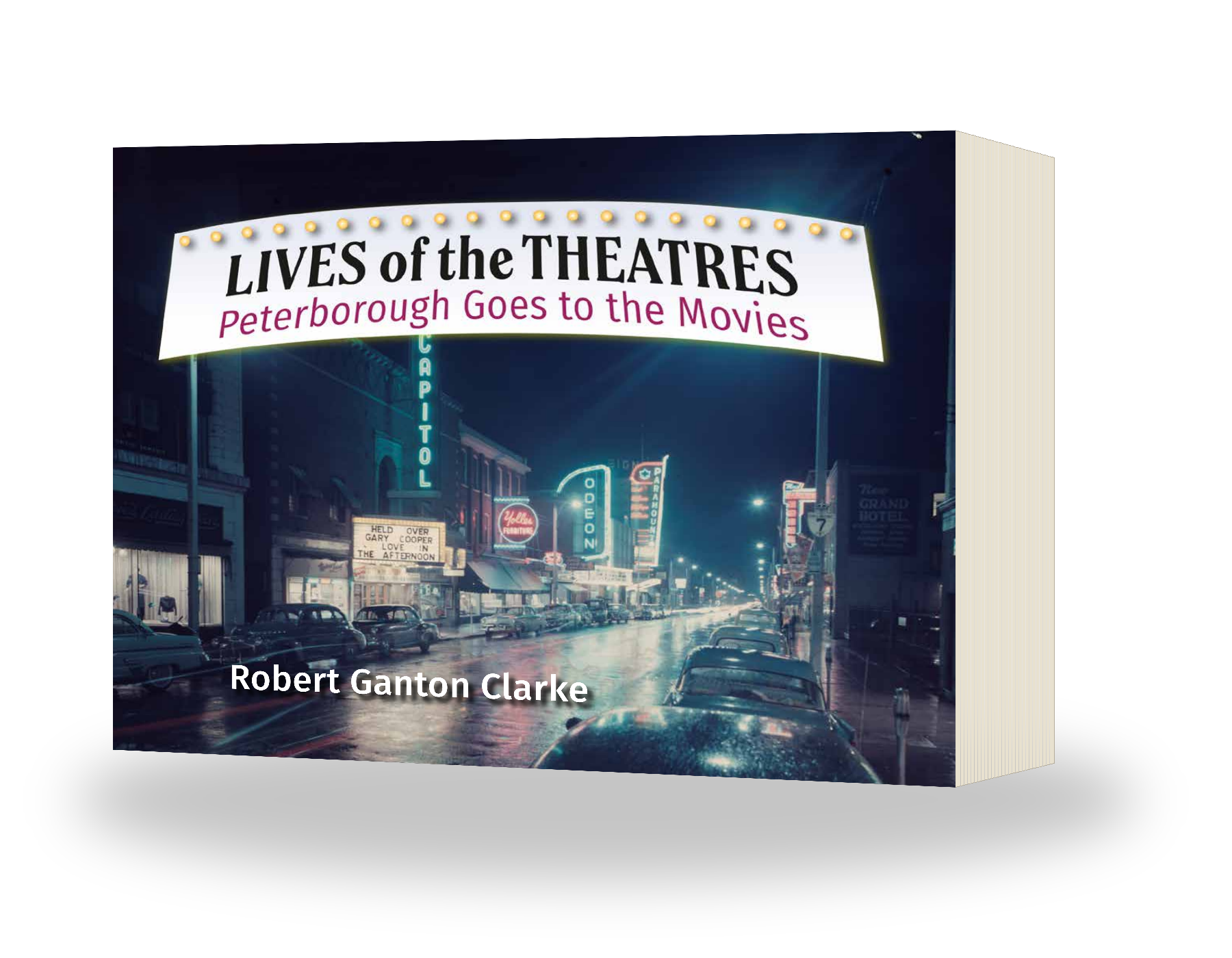
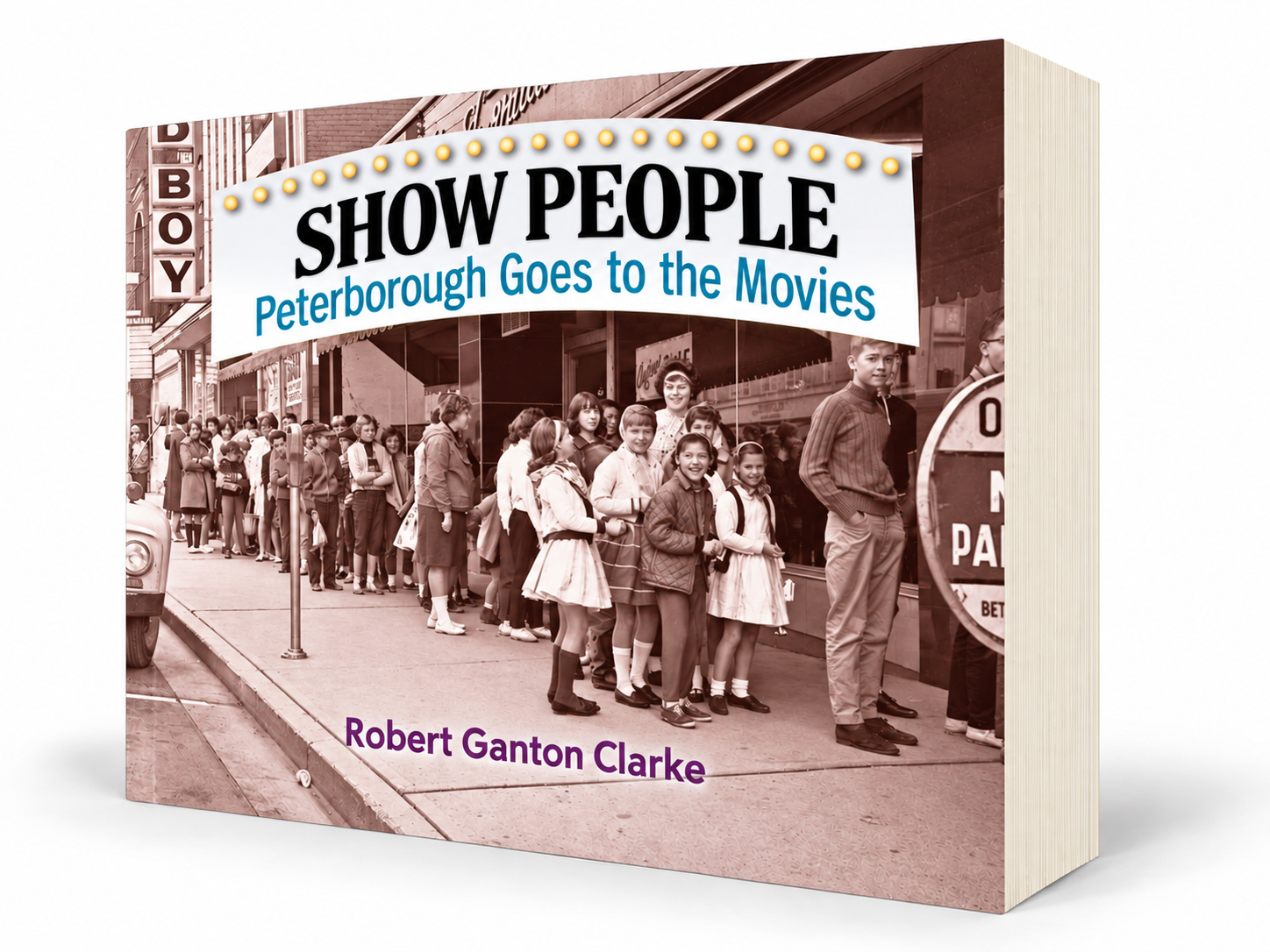
Peterborough Goes to the Movies

Lives of the Theatres & Show People


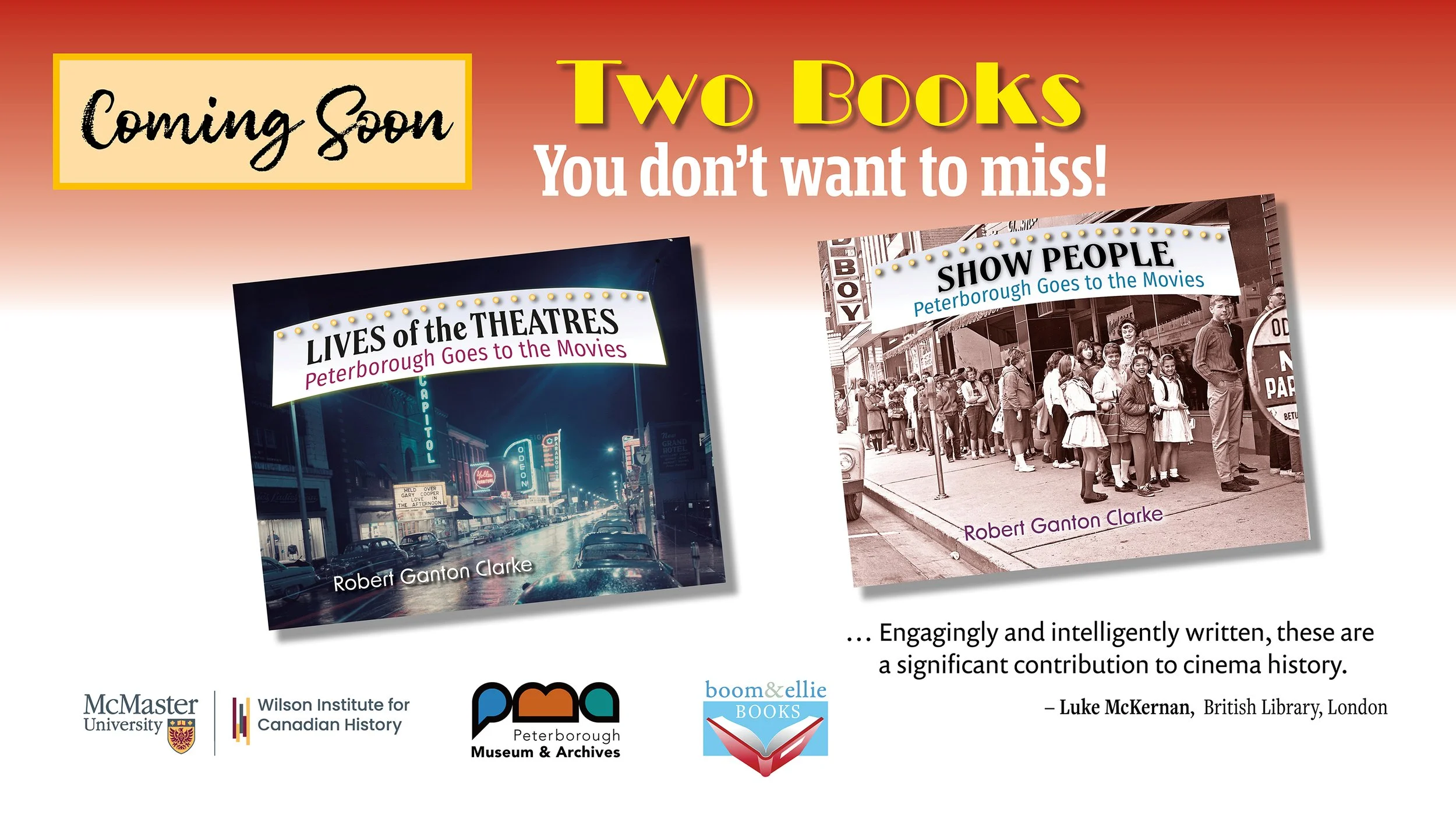
Two books by Robert Ganton Clarke
  • Robert Clarke is writing about a universal multidimensional theme – the movies – in a local place that he knows as well as anyone. Many of the stories are deeply moving – moving this reader to sadness, to laugh out loud – or into just plain learning about the life-changing importance of the filmic experience to people who were not themselves grand, but truly human. He shows how this process has helped to shape Peterborough over time – and it is a hell of a lot of fun simply to read this narrative.

    John Wadland, Professor Emeritus, Canadian Studies, Trent University

  • Interweaving meticulous archival research with personal memoir, Robert Clarke brings alive the diverse moviegoing experiences of a mid-sized Canadian city. Through a focus on the personalities involved, the screening venues, and the films themselves, he reveals the complex ecology and everyday textures of media consumption decades before the ubiquity of digital visual culture.

    Zoë  Druick, Professor, School of Communication, Simon Fraser University, author of Projecting Canada: Government Policy and Documentary Film at the National Film Board.

  • Lives of the Theatres is a marvellous combination of the local and the universal. Based on exemplary research, Robert Clarke finds in the history of Peterborough’s movie theatres themes and stories that will appeal to anyone interested in why we are so drawn to the silver screen. Engagingly and intelligently written, this is a significant contribution to cinema history.

    Luke McKernan, former Lead Curator, News and Moving Image, British Library, London, author of Picturegoers.

  • Robert Clarke has produced a rare and riveting portrait of one community’s response to – and sometimes struggles with – the forces of cultural modernity as they unfolded in its theatres and movie-houses. This micro-history of cultural reception combines a broad vision of the epochal shift to film as a force in mass culture with a finely detailed and fascinating analysis of how locals engaged with, and sometimes challenged, it.

    Ian McKay, Director, Wilson Institute for Canadian History

  • Robert Clarke’s love of Peterborough and its cinematic past is palpable: from the grand waterways, heritage buildings, and pretty parks, he excavates each site, not just as an archaeologist unearthing factoids about a place, but as a storyteller who weaves the past into tantalizing tales. For a smaller city Peter- borough has always had an outsized cultural impact, and Lives of the Theatres reveals why it matters to look closely at where we live and how things have changed – or not – over time.

    Amy Siegel, Creative Director, ReFrame Film Festival, 2018–23, Assistant Professor, Culture and Media Studies, University of New Brunswick

  • Those who have worked in film always seem to have led brighter lives. Not just those in front of or behind the camera, but in every aspect of the movie industry. As Robert Clarke’s excellent Show People reveals, there are wonderful stories to be told of cashiers, musicians, theatre owners, writers, projectionists, ushers, and audiences, all of them residents of Peterborough over the decades. All have been touched by the glamour of the movies. Cinema is not just about what we see on the screen – it is about the people.

    Luke McKernan, former Lead Curator, News and Moving Image, British Library, London, author of Picturegoers.

  • Kudos to Robert Clarke for bringing us this very important part of Peterbor- ough’s history. His work covers the various movie theatres as well as the show people who made the businesses work. Robert’s exhaustive research gives us the facts, and yet he has peppered his tale with photos, stories, and anecdotes that make this an informative and enjoyable read.

    Beth McMaster, long-time arts supporter and founding chair, Showplace Performance Centre

  • Robert Clarke captures the spirit of a city that has always been in flux as people, places, and politicians’ priorities change – and recalls that whenever we come together to participate in the collective experience of cinema and the arts, we are doing more than simply amusing ourselves: we are exploring and interpreting the diverse signposts of our surroundings and daily lives. May Show People show future generations how many hands are involved in building and sustaining cultural work over time.

    Amy Siegel, Creative Director, ReFrame Film Festival, 2018–23, Assistant Professor, Culture and Media Studies, University of New Brunswick

  • From the moment I picked up your book until I put it down, I was convulsed with laughter. Someday I intend reading it.

    Groucho Marx, blurb for S.J. Perelman’s first book, 1929

Lives of the Theatres and Show People, two companion books, are packed to the brim with stories and pictures springing from one medium-sized city’s long, historic infatuation with motion pictures – a social and cultural history: the times, the theatres, the varied experiences, the people who worked in the movie-going business – and the people who, over time, went to the shows.

“That the public of Peterborough is generally interested in and amused by motion pictures is beyond dispute.”
— Peterborough Daily Review, Sept. 25, 1909

Robert G. Clarke grew up in Peterborough and went to motion pictures downtown from an early age. He attended Queen Mary Public School, PCVS, and Knox United Church. He received an Hons. B.A. from Queen’s University, Kingston (1967) and an Hons.B.J. from Carleton University (1976). He worked for years editing books for Between the Lines, Toronto, and is the author of Books Without Bosses: 40 Years of Reading Between the Lines (2017).